Where Should You Go? Kenya, Tanzania, Uganda, or Zanzibar?
The first and most important decision is destination. East Africa is not a single destination — it is a region of wildly different experiences, and choosing the right country for your interests, budget, and schedule will shape everything that follows.
Kenya: The Classic Safari
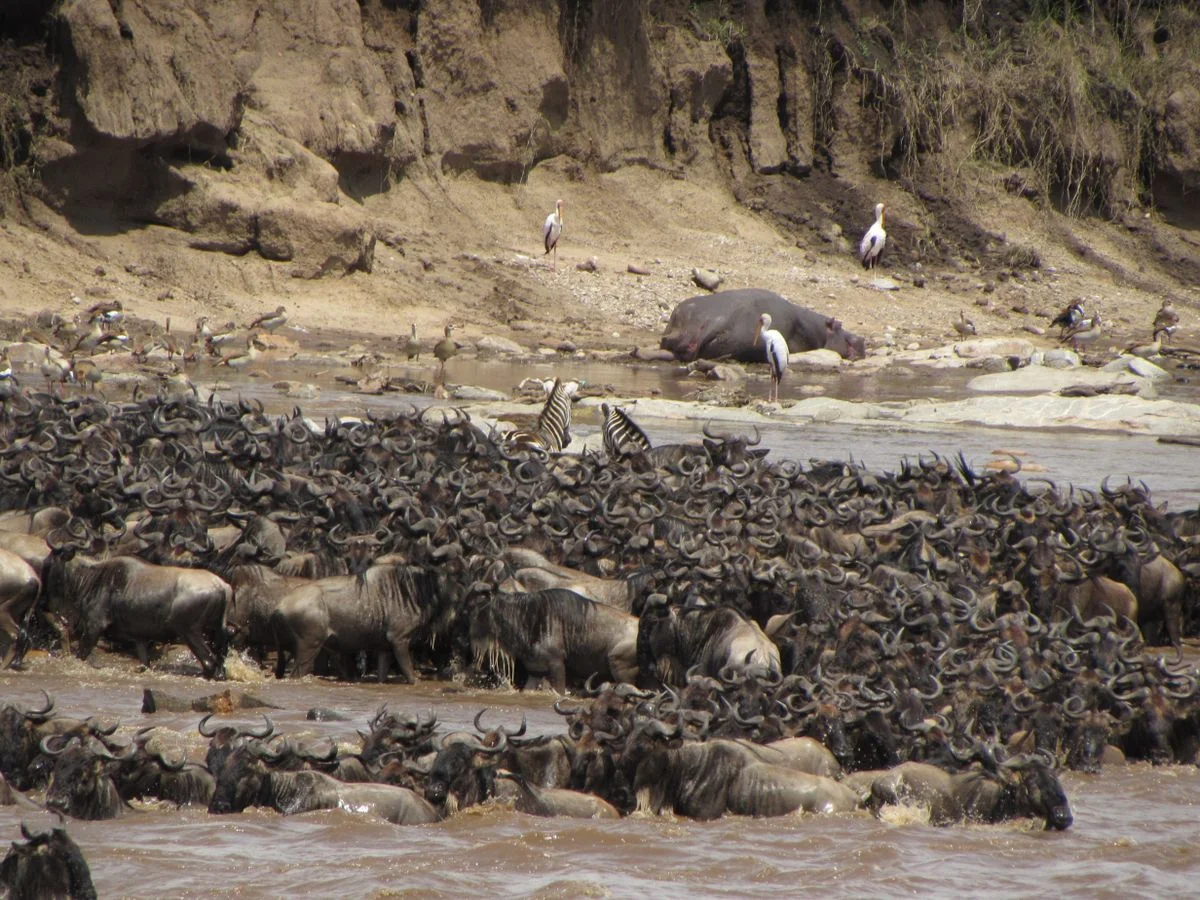
Kenya is the safari destination most travellers picture first, and for good reason. The Maasai Mara is world-famous for the Great Migration river crossings between July and October, when millions of wildebeest and zebras surge across crocodile-infested waters in one of nature's most dramatic events. Beyond the Mara, Kenya offers Amboseli's elephant herds with Mount Kilimanjaro as a backdrop, the Samburu reserve's unique northern species, and the Laikipia plateau's private conservancies where you can walk, ride, or drive through pristine wilderness.
Kenya's infrastructure is the most developed in the region. Domestic flights connect Nairobi to the Mara, Amboseli, Samburu, and Laikipia in under two hours, making multi-destination itineraries surprisingly efficient. Jomo Kenyatta International Airport (NBO) is well-connected internationally, and the country's tourism industry is mature, professional, and accustomed to travellers from every corner of the globe.
Tanzania: Scale and Diversity
Tanzania is East Africa's largest country and arguably its most diverse safari destination. The Serengeti alone is bigger than many small countries — a vast, rolling wilderness that hosts the Great Migration year-round, including the dramatic calving season on the southern plains between January and March. Nearby, the Ngorongoro Crater is a UNESCO World Heritage Site and a natural amphitheatre of wildlife, where you can see lion, elephant, rhino, buffalo, and leopard in a single morning drive.
Tanzania also offers Mount Kilimanjaro for climbers, Tarangire for baobab-dotted landscapes and elephant herds, Lake Manyara for tree-climbing lions and flamingo flocks, and the remote southern parks of Ruaha and Selous for travellers seeking genuine wilderness far from the crowds. Zanzibar, a semi-autonomous island off the coast, adds a beach extension that is among the best in the Indian Ocean — perfect for decompressing after a week or more on safari.
Uganda: The Primate Destination
Uganda is different from Kenya and Tanzania, and that is exactly why so many repeat East Africa travellers include it. While Kenya and Tanzania deliver classic savanna safari, Uganda delivers something no other country can match: mountain gorilla trekking in the misty forests of Bwindi Impenetrable National Park, where roughly half the world's remaining mountain gorillas live. A one-hour encounter with a gorilla family — watching a silverback rest, juveniles tumble through the undergrowth, and mothers cradle their infants — is widely described as the most profound wildlife experience on Earth.
Beyond gorillas, Uganda offers chimpanzee tracking in Kibale Forest, Queen Elizabeth National Park for tree-climbing lions and boat cruises on the Kazinga Channel, and Murchison Falls for the dramatic spectacle of the Nile forcing itself through a seven-metre gorge. Uganda's infrastructure is improving rapidly, and the country's welcoming culture, political stability, and relatively low prices make it an increasingly popular addition to East African itineraries.
Zanzibar: The Perfect Beach Extension
Zanzibar is not a separate country — it is a semi-autonomous region of Tanzania — but it deserves its own planning consideration. After a week or more on safari, Zanzibar's white-sand beaches, turquoise waters, and Stone Town's winding alleyways and spice-scented air provide the perfect counterpoint to the dust and heat of the bush. The island is also one of the best-value beach destinations in the Indian Ocean, with everything from budget guesthouses to five-star resorts.
Planning a Zanzibar extension is straightforward. Fly directly from Dar es Salaam or Arusha to Zanzibar International Airport (ZNZ) in under an hour. The same Tanzania visa covers you, and no separate permit is required. Most travellers combine three to five nights in Zanzibar with a mainland safari, though the island deserves more time if you have it.
When to Go: Understanding East Africa's Seasons
Timing is everything on an East African safari. The region's climate follows a relatively predictable pattern, but the difference between peak season and a quiet shoulder month can be the difference between crowded game drives and solitary moments with elephants. Here is how to read the seasons.
Peak Season: July to October
This is the Great Migration window in Kenya's Maasai Mara, when the wildebeest herds arrive from Tanzania and stage their dramatic river crossings. The Mara is at its most spectacular, but it is also at its busiest and most expensive. Lodges fill up six to twelve months in advance, and prices can be thirty to fifty percent higher than in the shoulder seasons. Tanzania's Serengeti is equally impressive during this period, with the herds spread across the northern and western regions.
Weather is dry and sunny, with warm days and cool mornings and evenings. This is the best time for photography, with clear light and animals concentrated around shrinking water sources. The trade-off is crowds and cost.
Shoulder Season: November to December and January to February
The short rains in November and December bring brief afternoon showers, lush green landscapes, and significantly fewer tourists. Game viewing remains excellent — the Great Migration herds are in the Serengeti, and predator activity is high. Prices drop by twenty to thirty percent, and lodges are quieter, meaning more personalised service and better access to guides.
January and February are calving season in the southern Serengeti, when half a million wildebeest calves are born within a few weeks. Predator activity is intense, and the plains are dotted with newborns. This is arguably the best time for dramatic wildlife action, though the Mara river crossings are not happening during these months.
Low Season: March to May
The long rains transform East Africa into a lush, green wilderness. Some roads become impassable, and a few remote lodges close entirely. But for travellers who do not mind occasional showers, this is an exceptional value season. Prices can be half of peak season, the parks are almost empty, and the landscape is at its most beautiful. Birdwatching is outstanding, with migratory species arriving from Europe and Asia. If budget is your primary concern, the long rains offer the best value of the year.
How Many Days Do You Need?
The most common mistake first-time safari planners make is trying to squeeze too much into too little time. East Africa is bigger than it looks on a map, and moving between destinations takes longer than you expect. A domestic flight between Nairobi and the Maasai Mara takes ninety minutes, but the same journey by road can take five or six hours. Here are realistic timeframes for different trip types.
First-time safari (one country): Seven to ten days is the minimum for a satisfying single-country safari. This gives you four to five days on game drives, with enough time to settle into the rhythm of early mornings, afternoon rests, and evening sundowners. Add two days for arrival and departure, and you have a solid itinerary.
Kenya and Tanzania combined: Twelve to fourteen days is realistic for visiting both countries without feeling rushed. Allocate five to six days to Kenya's Mara and Amboseli, and six to seven days to Tanzania's Serengeti and Ngorongoro, with a day in between for the border crossing and a domestic flight.
East Africa triangle with Uganda: Fourteen to eighteen days is the sweet spot for covering Kenya or Tanzania, adding Uganda for gorilla trekking, and including Zanzibar. Gorilla trekking itself requires at least three days — one for travel to Bwindi, one for the trek, and one for travel back — so plan accordingly.
Zanzibar extension: Three to five nights in Zanzibar is enough to decompress, explore Stone Town, and enjoy a few days on the beach. If you have a week or more, you can also visit the island's spice plantations, go snorkelling or diving, and take a day trip to Prison Island.
Building Your Itinerary: A Step-by-Step Approach
The best safari itineraries are built from the outside in — starting with your non-negotiable experiences and working backwards to flights, accommodation, and ground logistics. Here is the process we use with every client.
Step 1: Identify Your Must-See Experiences
Write down the three to five experiences that would make this trip unforgettable for you. For some travellers, it is witnessing the Great Migration river crossing. For others, it is meeting mountain gorillas in Bwindi. For many, it is simply the feeling of lying in bed at night and listening to lions roar in the distance. These anchor experiences should drive every other decision.
Step 2: Choose Your Timing
Once you know what you want to see, the timing becomes clearer. If the Mara river crossing is your priority, you need to be in Kenya between mid-July and late October. If gorilla trekking is the highlight, Uganda's Bwindi is year-round, but the drier months of June to September and December to February offer the easiest trekking conditions. If you want the Serengeti calving season, plan for January to February.
Step 3: Select Your Destinations
Match your must-see experiences to the parks and reserves where they happen. The Great Migration river crossing means the Maasai Mara. Gorilla trekking means Bwindi. Tree-climbing lions mean Lake Manyara. Baobab landscapes mean Tarangire. By mapping your priorities to specific destinations, you create a framework for the rest of your planning.
Step 4: Build the Route
Plot your destinations on a map and look for logical routes that minimise backtracking. In Kenya, a classic route is Nairobi — Mara — Amboseli — Nairobi. In Tanzania, Arusha — Tarangire — Lake Manyara — Ngorongoro — Serengeti — Arusha is the well-trodden northern circuit. For Uganda, Entebbe — Queen Elizabeth — Bwindi — Entebbe covers the highlights in a sensible loop. Zanzibar is always added at the end, after the mainland safari.
Step 5: Choose Accommodation
Accommodation in East Africa ranges from budget campsites to ultra-luxury lodges costing over one thousand dollars per night. The right choice depends on your budget, but also on your itinerary. In remote areas with limited options, book the best available. In popular destinations with plenty of choice, mix it up — spend a few nights in a mid-range lodge, one night in a luxury camp, and one night in a simpler tented camp to experience the variety.
Always check the lodge's location carefully. A lodge that is twenty minutes from the Mara River during migration season is a very different experience from one that is two hours away. Look at satellite maps, read recent reviews, and ask your operator to confirm driving times between the lodge and key wildlife areas.
Budgeting for Your Safari
East Africa safaris vary enormously in cost, and understanding the price drivers helps you allocate your budget effectively. Here is a realistic breakdown for a seven-day, single-country safari.
Mid-Range Safari: $3,000 — $5,000 per person
At this level, you can expect comfortable mid-range lodges or tented camps, shared game drives in a safari vehicle with four to six other guests, park fees, a professional guide, and most meals included. Domestic flights are optional. This is the sweet spot for value-conscious travellers who want a genuine safari experience without compromising on comfort or safety.
Luxury Safari: $6,000 — $12,000 per person
Luxury safaris place you in some of East Africa's finest lodges, often in private concessions with exclusive access to vast wilderness areas. You will have a private vehicle and guide, allowing you to set your own schedule and explore at your own pace. Many luxury lodges offer all-inclusive packages covering premium drinks, spa treatments, bush dinners, and even helicopter transfers. This is the level at which safaris become truly unforgettable.
Ultra-Luxury Safari: $15,000+ per person
For travellers seeking the absolute finest, East Africa delivers properties like Angama Mara in Kenya and Singita Sabora in Tanzania — lodges that rival the world's best hotels while placing you in the heart of the wilderness. Private charter flights, helicopter transfers, and bespoke experiences like hot air balloon safaris and private migration viewing are standard at this level.
Budget Factors to Plan For
Beyond accommodation and transport, budget for park fees (typically $50 — $100 per park per day), visa fees (around $50 per country), tips for guides and camp staff (10 — 15 percent is customary), travel insurance, and a contingency fund for unexpected expenses. Gorilla trekking permits in Uganda are the biggest single expense outside of accommodation — $700 per person as of 2026 — and must be booked well in advance.
Visas, Vaccinations, and Entry Requirements
Before you can board your flight to East Africa, you need the right paperwork. The requirements vary by country, and getting them wrong can mean being turned away at the airport. Here is what you need to know.
Kenya
Kenya's e-Visa portal at evisa.go.ke is the most efficient in the region. A single-entry tourist visa costs USD 51, is valid for 90 days, and is typically processed within two to three business days. The passport must have at least six months validity and two blank pages. One important detail: plastic bags are banned in Kenya, including in both checked and carry-on luggage. Airport security actively checks for them.
Tanzania
Tanzania's e-Visa at visa.immigration.go.tz takes three to five business days. Single-entry tourist visas cost USD 50 for most nationalities, or USD 100 for United States citizens. The visa is valid for 90 days from issue. Tanzania also offers the East Africa Tourist Visa at USD 100, which covers Kenya, Tanzania, and Uganda on a single document — ideal for multi-country itineraries. If flying directly into Zanzibar (ZNZ), a visa on arrival is available for USD 50 in cash.
Uganda
Uganda's e-Visa portal at visas.immigration.go.ug also takes three to five business days. The single-entry tourist visa costs USD 50, and the East Africa Tourist Visa multiple-entry option is available at USD 100. The critical requirement for Uganda is a Yellow Fever vaccination certificate, which is systematically checked at Entebbe International Airport. Without it, you will be denied entry. Plan your vaccination at least ten days before departure.
Zanzibar
Zanzibar uses Tanzania's visa system. No separate visa is required — your Tanzania document covers you completely. Passport must have six months validity, and immigration officers at ZNZ occasionally request proof of onward or return travel.
Health and Safety: What You Need to Know
East Africa is a safe and welcoming destination for travellers, but a few health precautions are worth taking seriously. Here is the essential checklist.
Vaccinations
Beyond the Yellow Fever certificate required for Uganda, the World Health Organization and Centers for Disease Control recommend routine vaccinations (measles, mumps, rubella, tetanus, diphtheria, polio) and hepatitis A and B. Typhoid and rabies vaccines are also recommended for longer trips or travellers spending time in rural areas. Consult a travel health clinic at least four to six weeks before departure — some vaccines require multiple doses over time.
Malaria Prevention
Malaria is present in most of Kenya, Tanzania, and Uganda, particularly in rural and low-altitude areas. The risk is lower in Zanzibar and on Kenya's high-altitude areas like the Maasai Mara, but prevention is still recommended. Consult your doctor about antimalarial medication before you travel, and pack DEET-based insect repellent, long-sleeved clothing for evening use, and a mosquito net if your accommodation does not provide one.
Travel Insurance
Comprehensive travel insurance is non-negotiable for an East African safari. Look for a policy that covers medical evacuation by air — this is critical in remote areas where road access is limited. Also ensure your policy covers trip cancellation and interruption, lost luggage, and safari-specific activities such as gorilla trekking and hot air balloon rides. Some premium credit cards include travel insurance — check your card's terms before purchasing a separate policy.
Safety in Safari Areas
East Africa's safari destinations are remarkably safe. Wild animals are the primary safety consideration, and they are managed through strict park rules, experienced guides, and well-designed lodges. Never leave your vehicle unless instructed by your guide, never approach animals on foot, and always follow your guide's instructions. In towns and cities, use the same common sense you would anywhere else — avoid walking alone at night, keep valuables secure, and use reputable transport.
What to Pack: The Ultimate Safari Checklist
Packing for an East African safari is different from packing for any other trip. The climate varies dramatically between early mornings on game drives and midday heat, between the cool highlands of Kenya and the humid forests of Uganda. Here is what you actually need.
Clothing
Pack in layers. Mornings on open-sided safari vehicles can be cold — temperatures often sit between ten and fifteen degrees Celsius before sunrise, even in warm destinations. By midday, you will be in a t-shirt. A fleece jacket, windproof layer, and lightweight scarf are essential for early starts. For daytime, pack neutral-coloured clothing — khaki, beige, olive, and brown work best. Bright colours and white attract insects and are discouraged by many guides. Avoid black, which absorbs heat and makes you visible to wildlife.
Long trousers and long-sleeved shirts protect against sun, scrub, and insects. A wide-brimmed hat, sunglasses, and high-SPF sunscreen are non-negotiable. Sturdy, broken-in hiking boots are essential for gorilla trekking and bush walks. For everything else, comfortable closed-toe shoes or trainers will suffice.
Gear and Equipment
A pair of binoculars is the single most useful item you will pack. You do not need expensive astronomy-grade optics — a reliable mid-range pair will transform your game drive experience. A camera with a zoom lens (at least 200mm) will capture wildlife moments you will treasure forever. Bring spare batteries (cold mornings drain them faster than expected) and multiple memory cards.
Other essentials: head torch for night walks and navigating camp in the dark, plug adapter (East Africa uses British-style Type G plugs in Kenya and Tanzania, and Type G and Type C in Uganda), reusable water bottle, day pack for game drives, personal medications, and anti-malarial medication if prescribed.
What Not to Pack
Leave the plastic bags at home — Kenya's ban is strictly enforced. Avoid valuable jewellery, expensive watches, and large amounts of cash. Most lodges accept credit cards, and US dollars in good condition are widely accepted for tips and small purchases. Do not pack unnecessary electronics — many lodges have limited charging capacity, and the bush is not the place for distraction.
Choosing the Right Safari Operator
Your choice of safari operator will define the quality of your trip more than any other single decision. A great operator secures the best guides, selects appropriate accommodation, manages logistics seamlessly, and responds calmly when things go wrong — because on safari, things occasionally do. Here is how to choose.
What to Look For
Look for an operator with local presence and long-standing relationships in the destinations you are visiting. East Africa's best lodges and guides often prefer to work with established operators who book consistently and treat their staff well. Ask about the guides — your guide is your most important companion on safari, and the difference between a good guide and a great guide is the difference between a good trip and a life-changing one. Ask the operator to match you with a guide who shares your interests, whether that is birds, big cats, or cultural history.
Check the operator's response time and communication style during the planning phase. Do they answer emails promptly? Do they listen to your preferences, or do they push standard itineraries? The best operators ask questions, make thoughtful recommendations, and tailor every detail to your needs.
Questions to Ask Before Booking
- How long have you been operating in East Africa?
- Who are the guides, and what is their experience level?
- What happens if a lodge is overbooked — what is the contingency?
- Are domestic flights included, or are they billed separately?
- What is the cancellation policy?
- Can you provide references from recent clients?
At Esteemed Africa Safaris, we bring over a decade of on-the-ground experience in Kenya, Tanzania, Uganda, and Zanzibar. Every itinerary is designed by specialists who know each park, each lodge, and each guide personally. We handle the logistics so you can focus on the experience.
Common Safari Mistakes to Avoid
Even experienced travellers make planning errors on their first East African safari. Here are the most common ones, and how to avoid them.
Packing too much into too few days. The Mara River crossing sounds like a one-day event, but migration timing shifts, and you need multiple days to position yourself correctly. Give each destination at least three or four nights.
Choosing accommodation by price alone. A cheap lodge in the wrong location is a false economy. Two nights in a well-located mid-range lodge will give you a far better safari than five nights in a budget lodge an hour from the action.
Forgetting about travel time between destinations. Road transfers in East Africa can be long and bumpy. Factor in rest days, and consider domestic flights for longer distances.
Skipping travel insurance. Medical evacuation from a remote park can cost tens of thousands of dollars. Comprehensive insurance is a small price for peace of mind.
Not booking gorilla permits in advance. Uganda's gorilla permits are limited and sell out six to twelve months ahead during peak season. Book as soon as your dates are confirmed.
Underestimating the power of a good guide. Your guide will make or break your safari. Ask for someone with experience, passion, and excellent English. A great guide turns a good game drive into an unforgettable learning experience.
Your Safari Journey Starts Here
Planning an East African safari is a journey in itself — one that should be as exciting as the trip it leads to. With the right preparation, the right operator, and the right mindset, you will arrive in Africa not just as a tourist, but as a traveller ready to experience one of the most remarkable places on Earth.
The savanna is waiting. The migration is moving. The gorillas are in the forest. All you need to do is start planning.
Admin
Nos experts en safari cumulent des décennies d'expérience dans la conception d'itinéraires sauvages de luxe au Kenya, en Tanzanie, en Ouganda et au Rwanda.